
How it’s made · Riga, Latvia
Twelve hours. Apples and egg white. Nothing to hide.
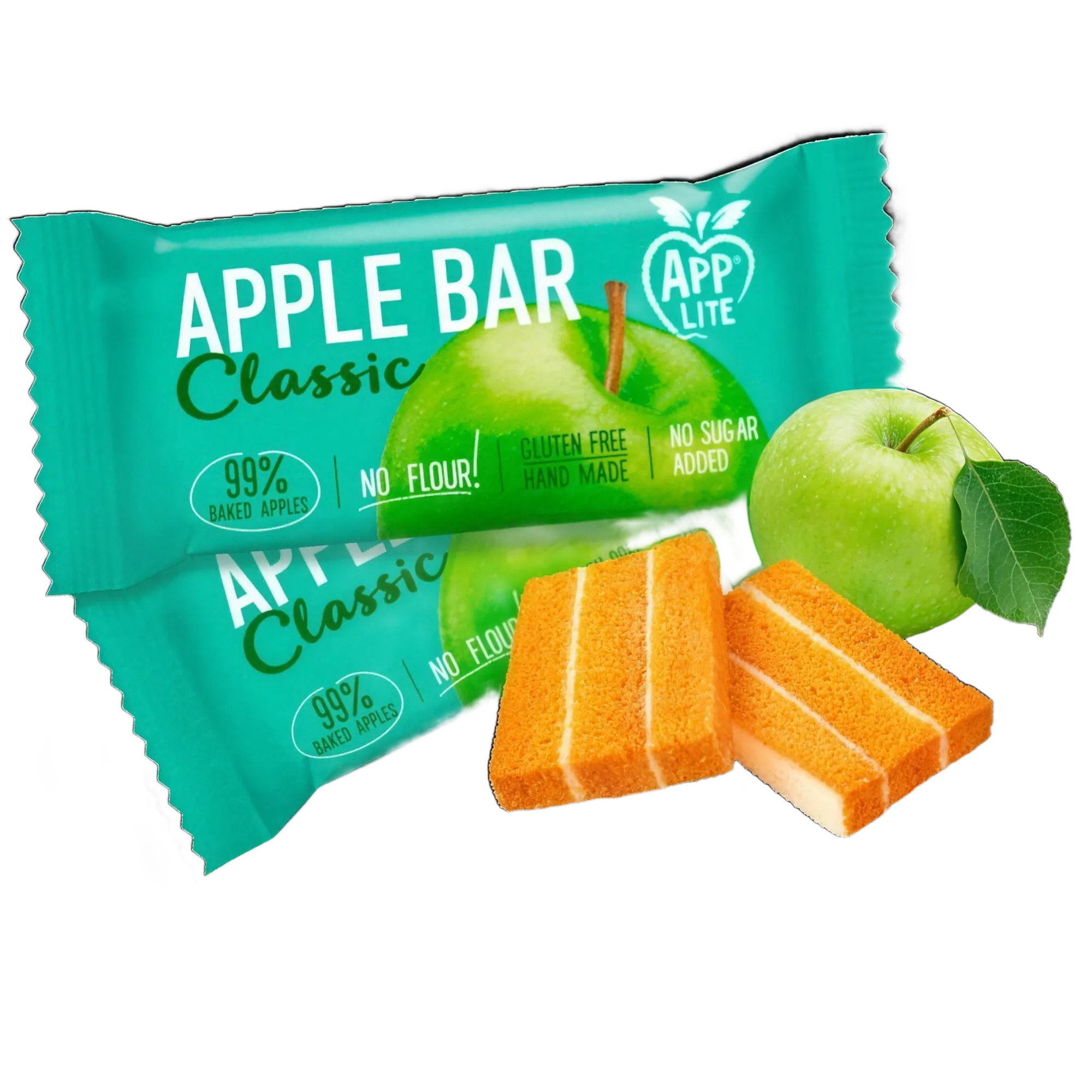
This is how our baked apple snacks are made, from orchard to sealed pack: apples baked whole, puréed, whipped with egg white, dried in thin sheets and pressed into blocks.
- 99% baked apples
- 1% egg white
- No added sugar
- 12-month shelf life
Hours from a whole apple to a sealed bar.
From orchard to wrapper
What twelve hours do to one apple.
- 01
One apple.
Whole, skin on, with its own pectin. Nothing has been added to it yet, and nothing will be.
- 02
Baked whole, until it collapses.
Hours in a low oven. The sugars caramelise on their own — that is where all the sweetness comes from.
- 03
Whipped with egg white.
Beaten until it triples in volume and holds the air. That is the entire second ingredient.
- 04
Spread thin, dried slowly.
Twelve hours at low heat turn the foam into a fibrous sheet you can lift in one piece. That sheet is pastila.
- 05
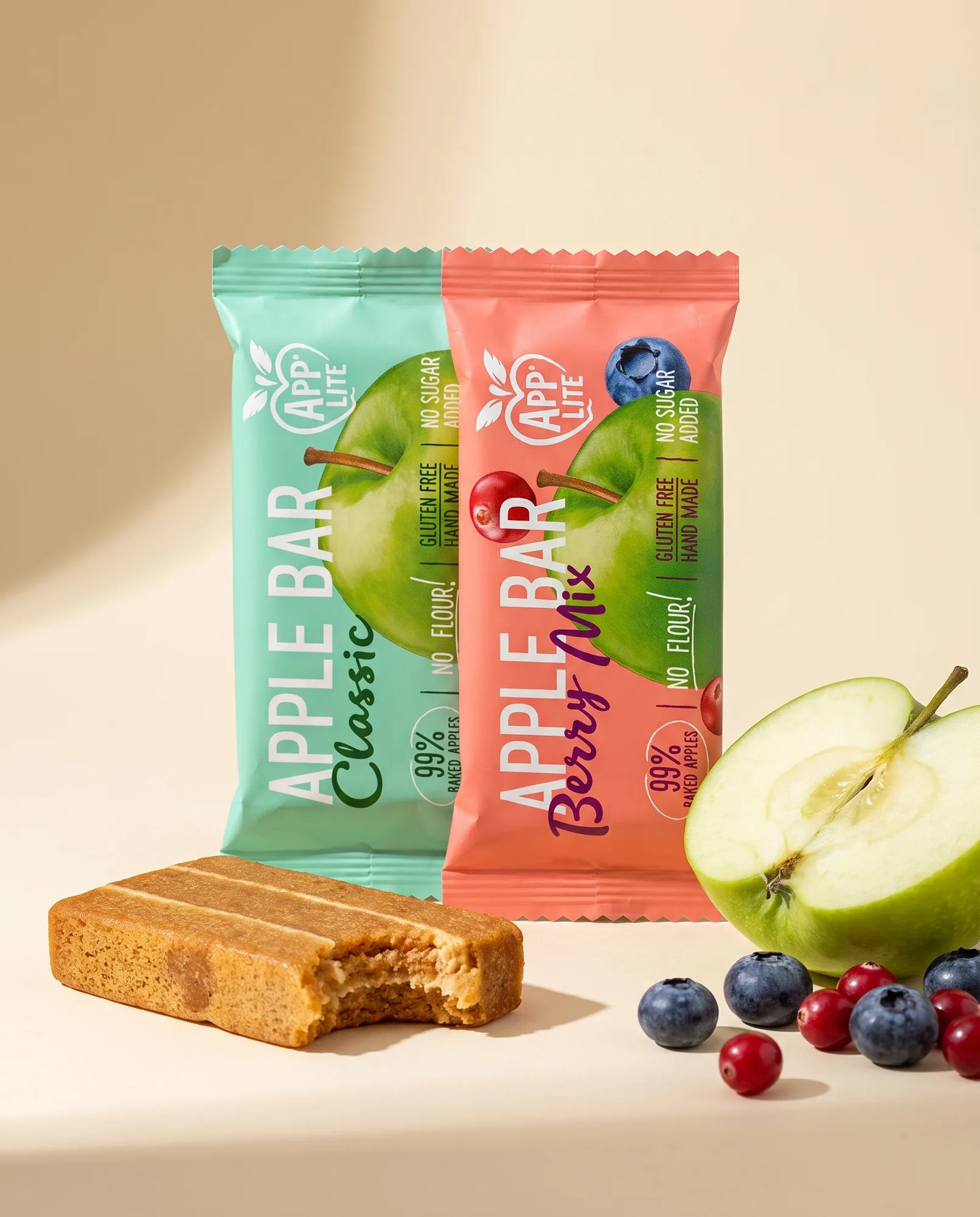
Cut into a 35 g bar.
Two ingredients, sealed the same day it is cut.
The process
Eight stages, in order. None skipped, none hurried.
Most of the twelve hours is waiting. The rest is baking, whipping and cutting by hand.
Apples
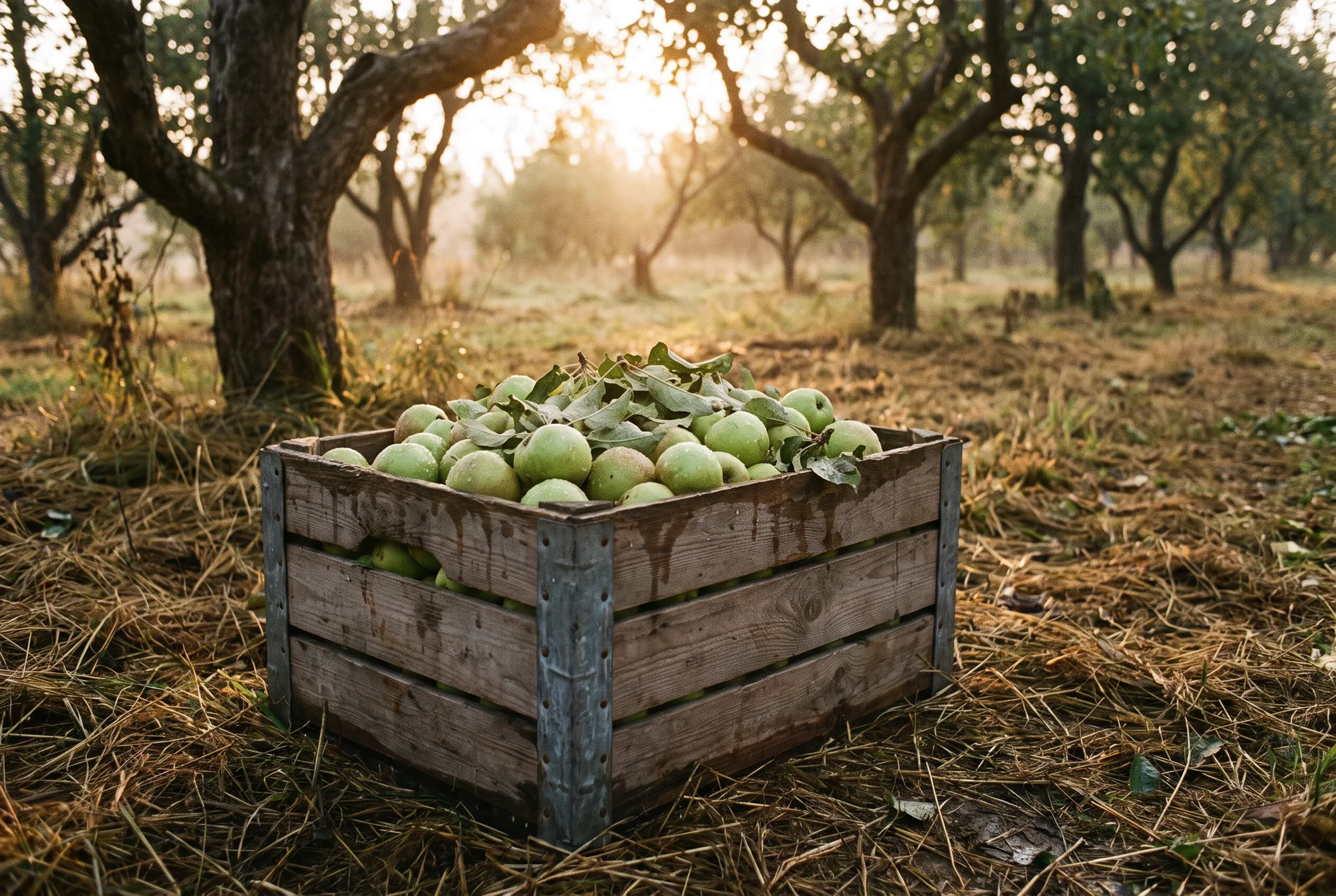
Choosing the apples
Everything starts with apples, and nothing stands in for them later. Apples bring their own pectin and acid, which is what lets the purée set without gelatine and taste of fruit rather than sugar.
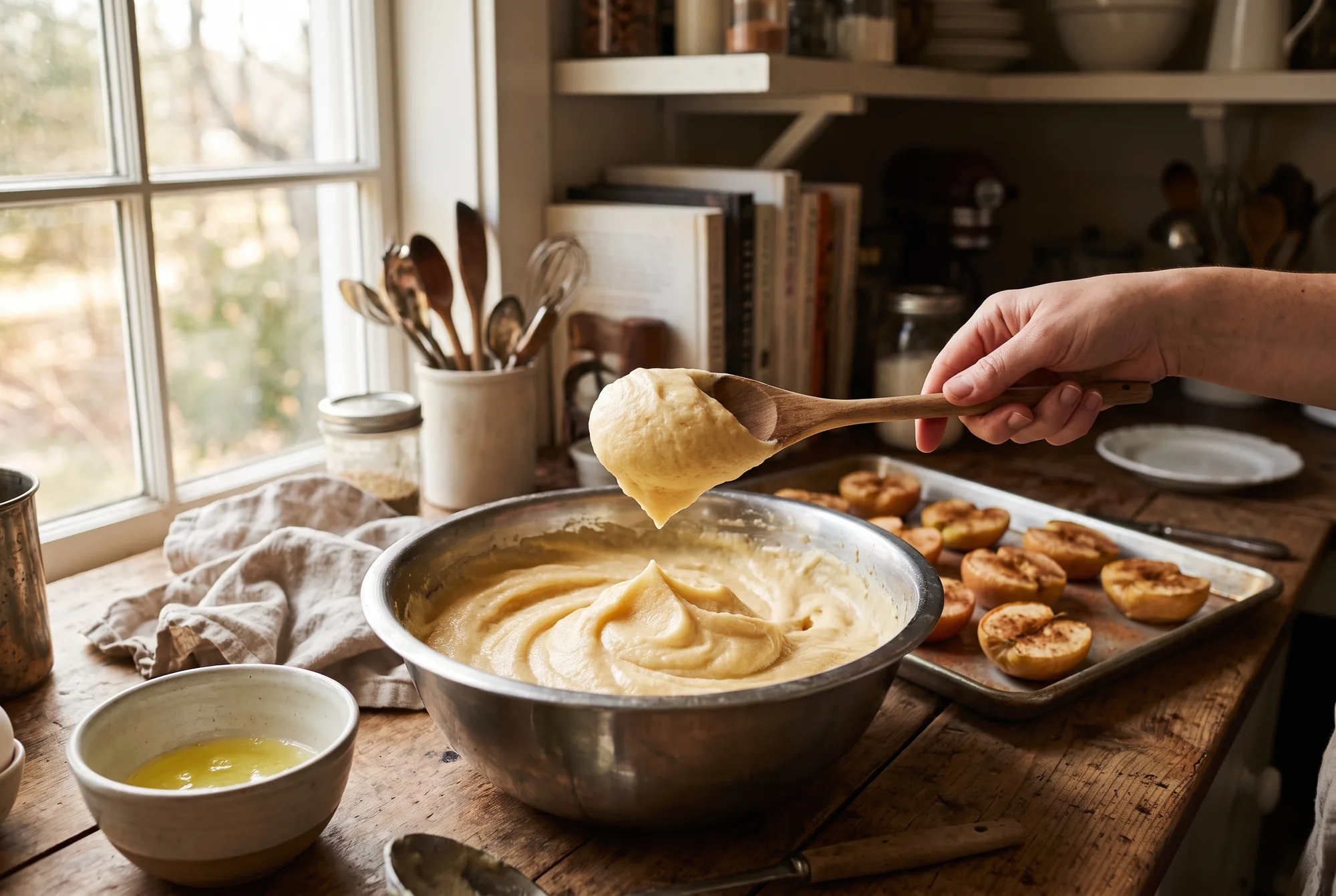
Bake
Baking the apples whole
The apples go into the oven whole, skins on. Slow heat softens the flesh and caramelises the fruit’s own sugars, turning the flavour from sharp and green to warm and honeyed. Every bit of sweetness in the finished pastila is made here; there is no other source.
Purée
Puréeing
Once baked, the apples are passed through a fine sieve. Skins, cores and pips stay behind; the smooth pulp goes on. Nothing is added at this stage, and nothing is taken away except the parts you would not eat anyway.
Whip
Whipping with egg white
The warm purée is whipped with fresh egg white until it triples in volume and holds a soft peak. This is the step that turns fruit into pastila: air, caught in a web of apple pectin and egg protein. It is also why a bar weighs so little for its size.
Spread
Spreading thin
The foam is spread in thin, even sheets on trays. Thin matters. It lets moisture leave evenly, so each layer dries to the same texture with no wet centre and no hard crust.
Dry
Slow drying
The sheets dry for hours at low heat — gently, never baked a second time. Water leaves; flavour stays and concentrates.
Layer
Layering and pressing
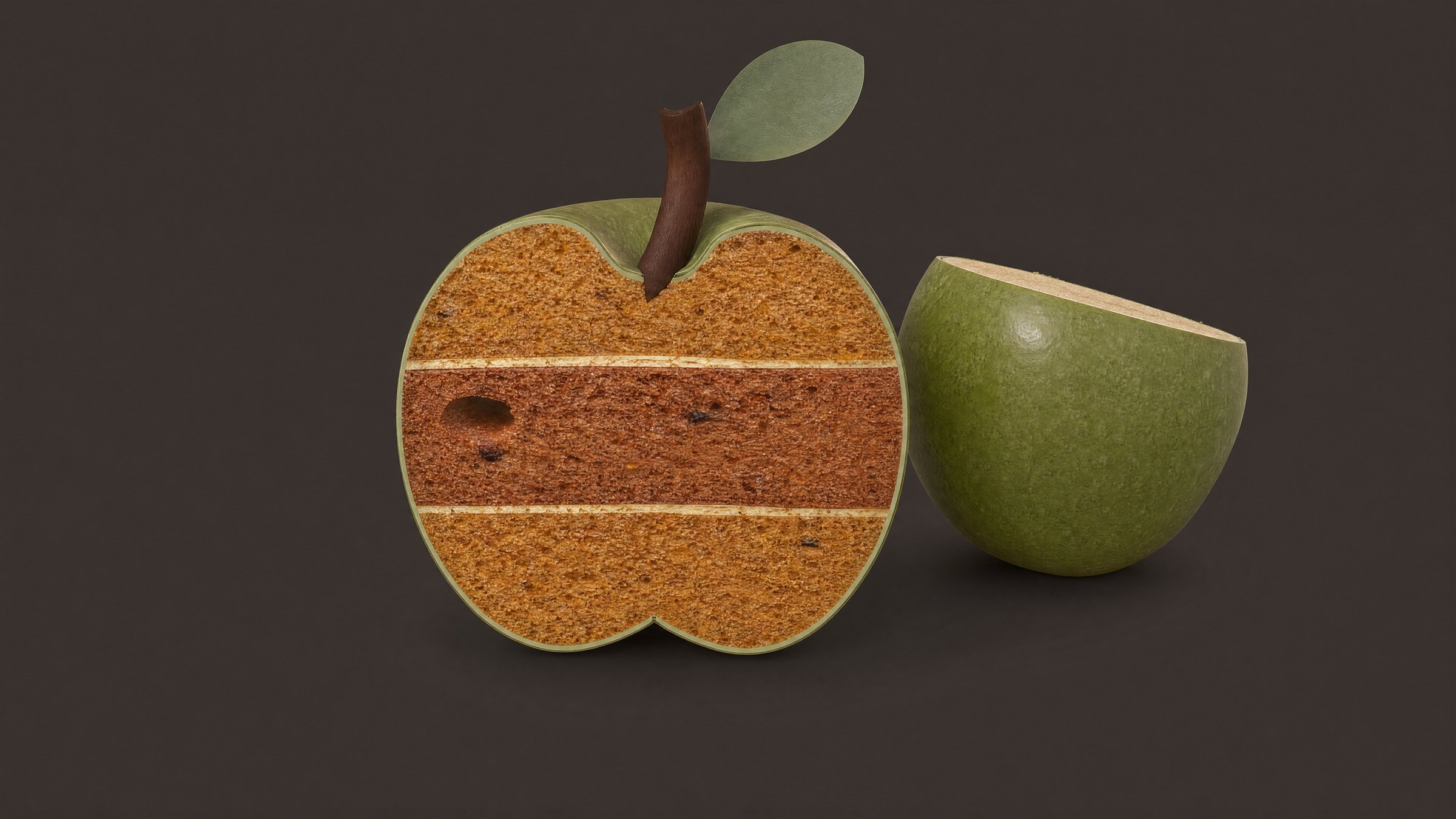
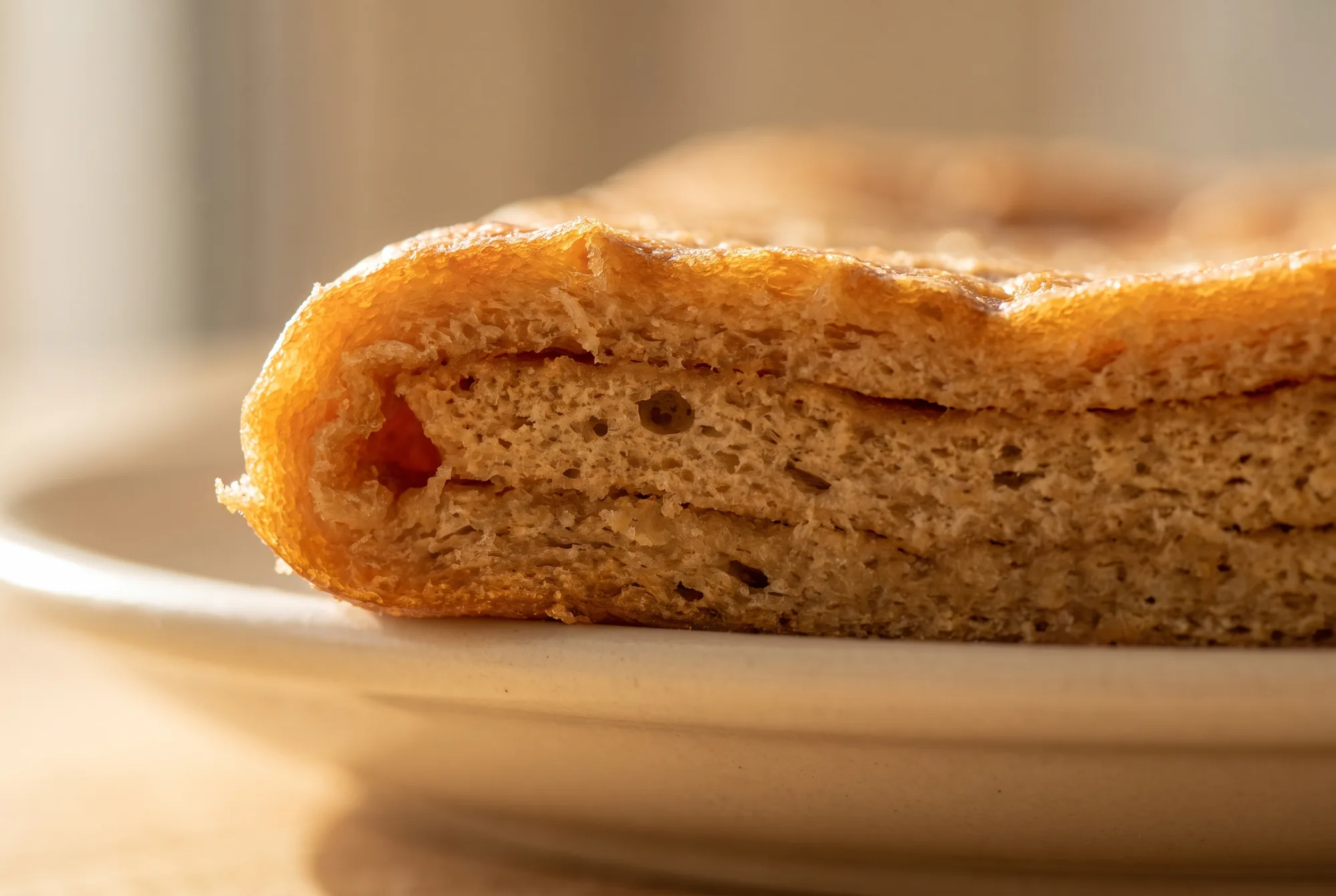
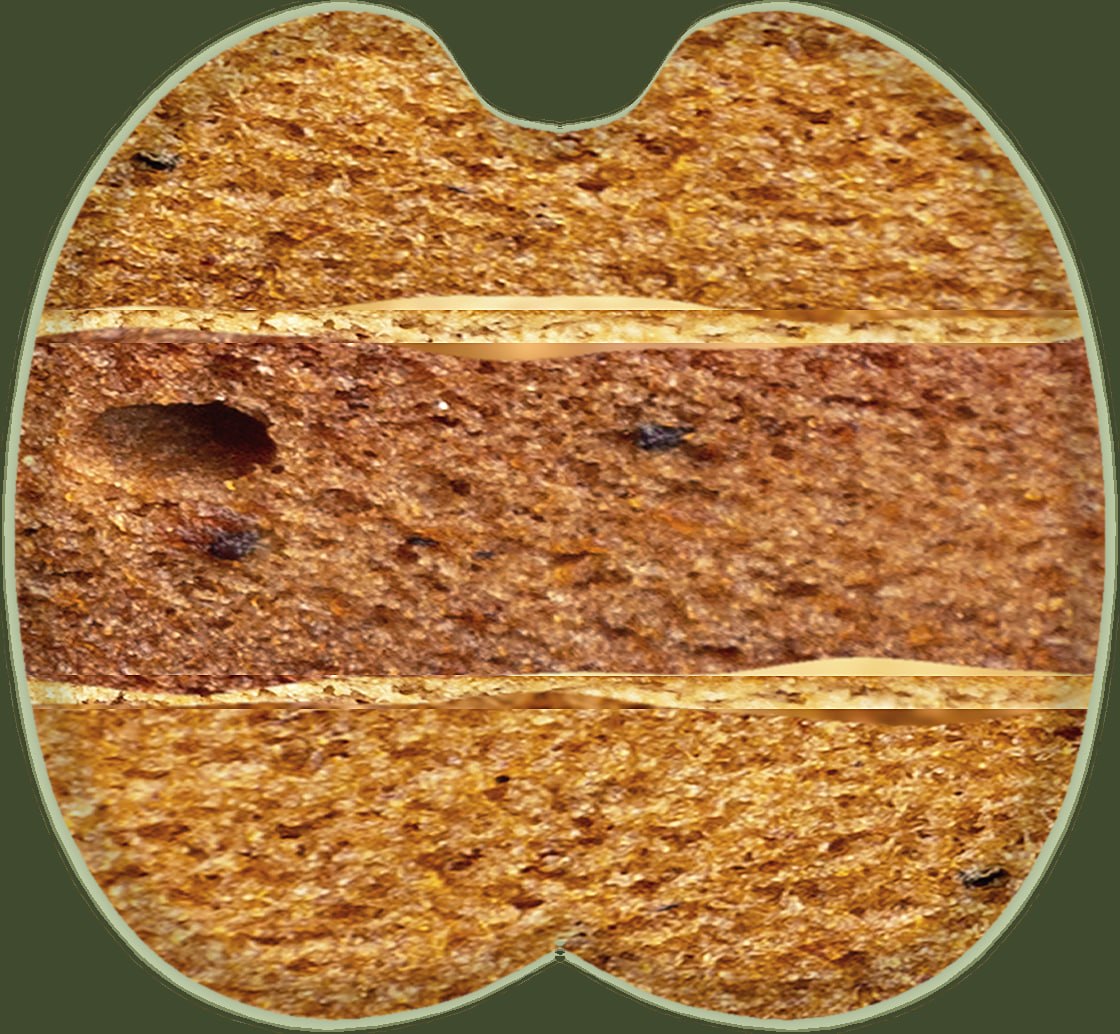
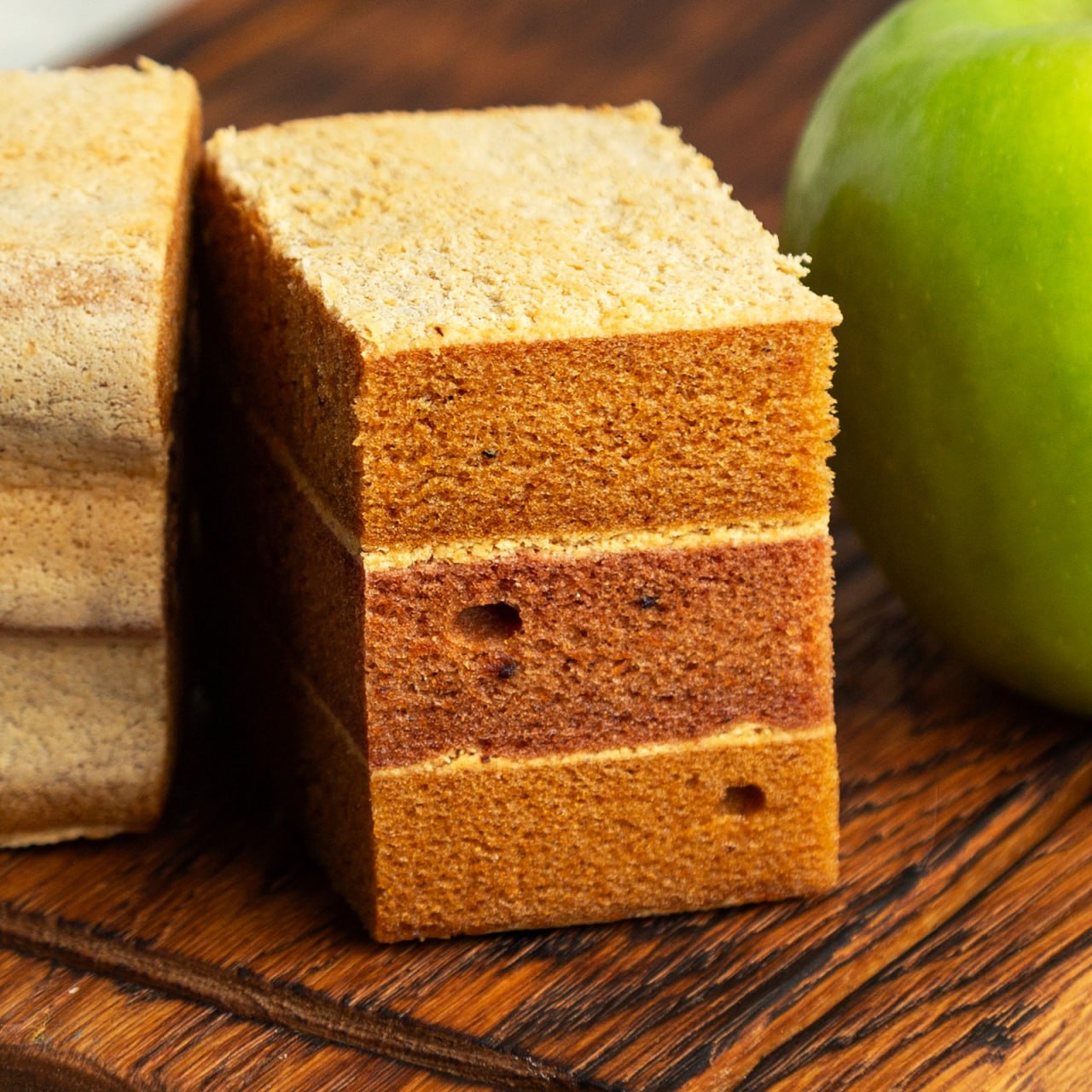
Dried sheets are brushed with a little of the same apple foam, stacked several high and pressed into a block. The foam glues the layers together, and the whole block goes back into the warmth to set. This layering is the reason a cut face looks like the pages of a book.
Cut & pack
Resting, cutting and packing
The blocks rest until the texture settles, then are cut into bars and squares and sealed the same day, each pack stamped with a batch label. Nothing is dusted, dipped or sprayed on the way. What leaves the drying room is what you open at home.
The one per cent
Egg white does one job. It holds the air.
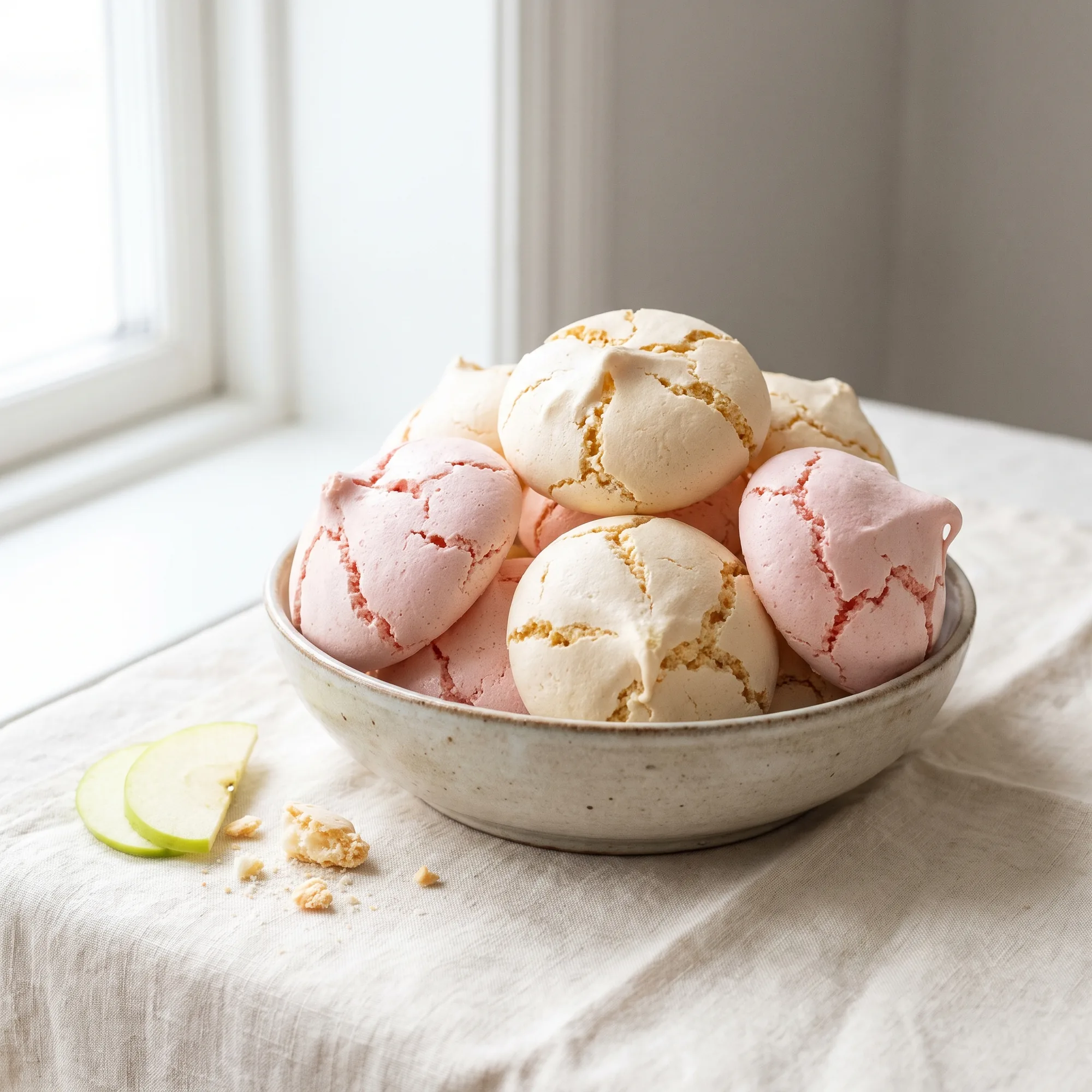
Egg white is about one per cent of the recipe and does exactly one thing: it traps air. Whipped into warm apple purée, its proteins stretch around each bubble the way they would in a meringue. The setting, though, is done by the apple’s own pectin, so there is no sugar to add and no gelatine to hide.
- Sets on its own — apple pectin, not gelatine
- Sweet on its own — baking concentrates the fruit
- Light on its own — air does the lifting, not flour
What comes out is springy and faintly tart, a little like sponge and a little like dried fruit. It is a texture you will not find in a bar made with flour and syrup.
Why that matters for what you eatTransparency
Cut one open. It is apple all the way through.
No coating, no filling, no binder. The layers in a cut bar are the same whipped apple, dried and stacked; the gold colour is caramelised fruit, not a colouring. What is printed on the label is the whole of what is inside, and none of it needs a footnote.
The short list
What goes in, and what we never add.
Two columns. One of them is very short on purpose.
Goes in
- Baked apples — 99% of every App’Lite Apple Bar, meringue and 50 g dessert, as the packs print it; the Berry Mix dessert counts its berries in the 99%
- Egg white — the other 1%
- Whole berries or cinnamon — in the flavoured versions only
Never does
- Sugar — baking the apple does the sweetening
- Syrups — no glucose, agave, date or rice syrup
- Sweeteners — no stevia, erythritol or sucralose
- Gelatine — apple pectin sets the foam
- Flour — air does the lifting
- Oils or fats — nothing pressed, sprayed or spread on
- Colours — the gold is caramelised apple
- Flavourings — not even “natural flavouring”
This is the recipe for our App’Lite Apple Bars, meringues and 50 g baked apple desserts. Full ingredient lines are on every product page and every pack.
Quality and shelf life
Dated, labelled, and stored as the pack says.
Each product keeps in its own way, so each pack says how. The best-before date printed on it is the one to trust; here is what the packs say about the rest.
A batch label on every pack
Batch code and best-before date, printed at packing, so any pack can be traced back to the batch it came from.
Shelf life, product by product
App’Lite Apple Bars: twelve months. The 50 g desserts: nine months at +8 to +10 °C, or four at +10 to +25 °C, at no more than 75–80% relative humidity. The 500 g carton: eighteen months at +8 to +25 °C.
Storage, where the pack gives it
Meringues: at no more than 25 °C and 75% relative humidity, away from anything with a strong smell. Blum Baker’s flourless cakes: cool and dry, between +8 and +21 °C.
Packed the same day
Cut and sealed on the day it leaves the drying room. Nothing sits around waiting for a box.
Allergens: contains egg. The full allergen line is on each product page.
Taste the twelve hours
Start with a bar. The rest will follow.
Baked apple, egg white, time. Parcels leave Riga in 1–2 business days, and orders over €20 ship free.